Learning through Making
Experimental Archaeology in Wexford, Ireland
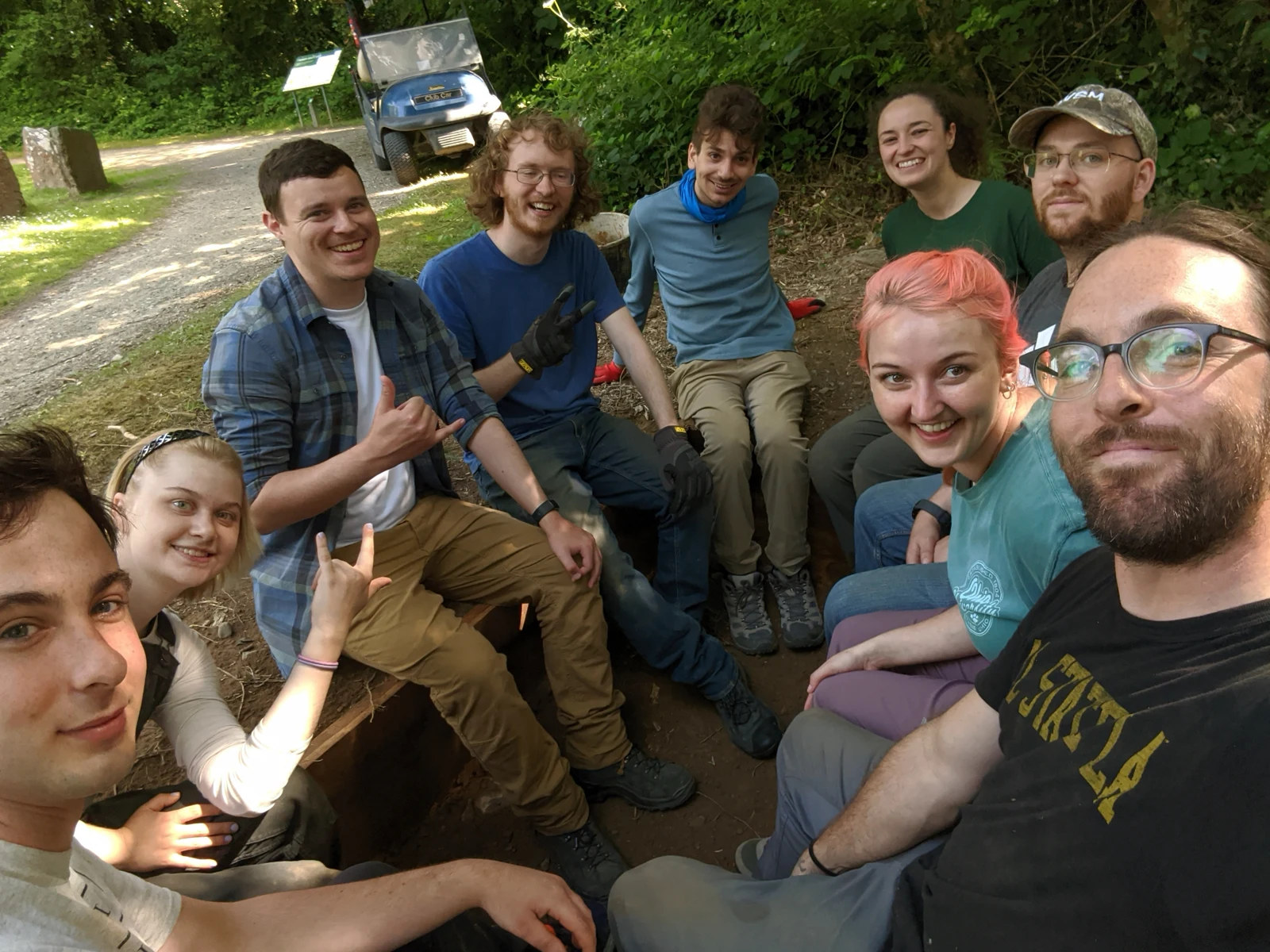
In June and July 2023, I spent a month studying experimental archaeology at Ferrycarrig in the Irish National Heritage Park, Wexford. Our projects brought together stone tool production, metallurgy, the construction and use of a fulacht fiadh, traditional masonry, and historical cooking. Weekly field trips complemented this work, connecting our practical experiments with archaeological sites, historical landscapes, and museum collections.
Working directly with materials helped me appreciate the knowledge behind these technologies. Decisions about stone, fuel, temperature, construction, and timing became tangible problems that we had to work through together. The experience also involved sharing our work with visitors, connecting archaeological research with public education.
Working with Stone Tools
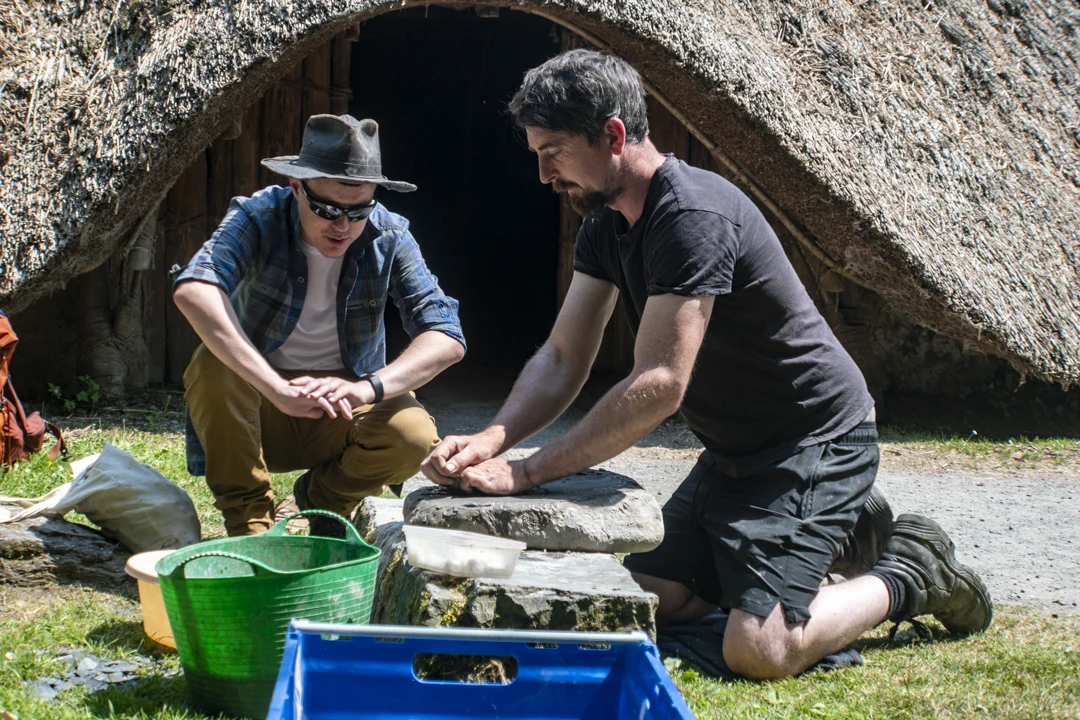
Our work with stone included grinding tools against red sandstone and recording progress at five-minute intervals. This required patience and close attention to how the materials interacted, allowing us to observe the relationship between effort, technique, and the changes produced.
The process gave me a greater appreciation for the skill involved in stone tool production. Working through it ourselves helped us understand how material selection and accumulated experience could influence the finished tool.
Testing a Claim through Metallurgy
One of our experimental projects investigated a published claim about the feasibility of prehistoric copper and bronze production. As I recall, the paper suggested that the process would have been impractical with the technology available, with an estimated timescale exceeding 1,000 hours. Our experiment explored that claim through practical testing.
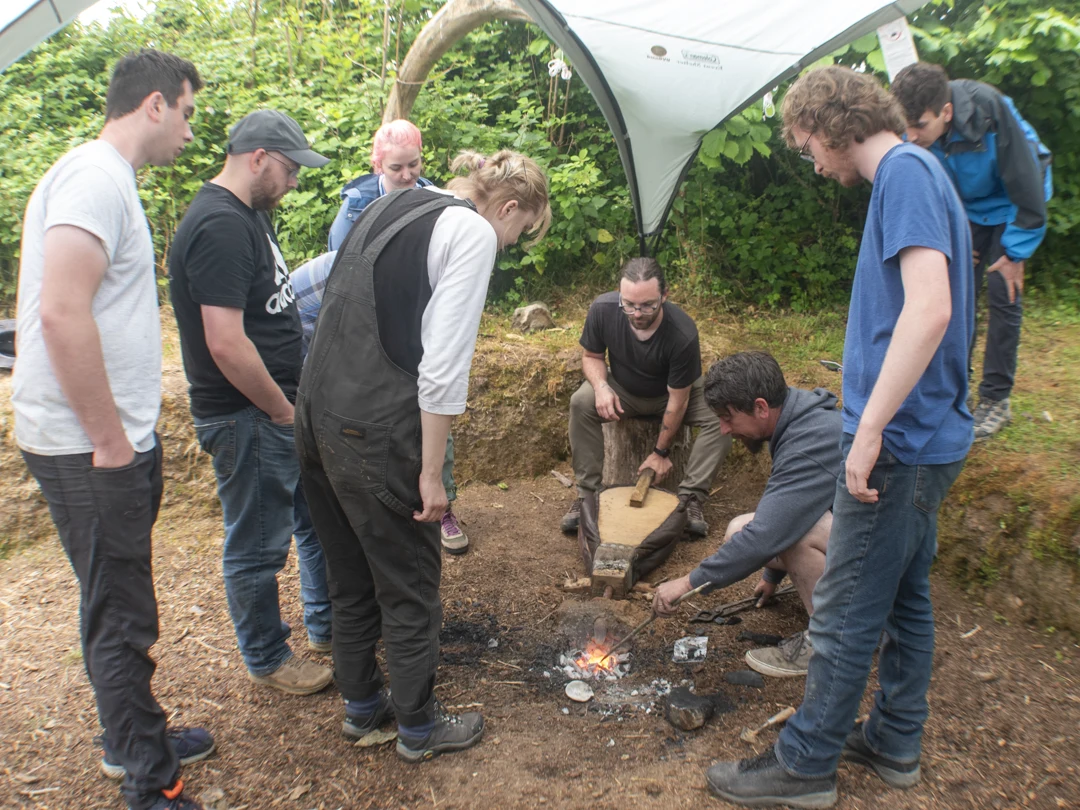
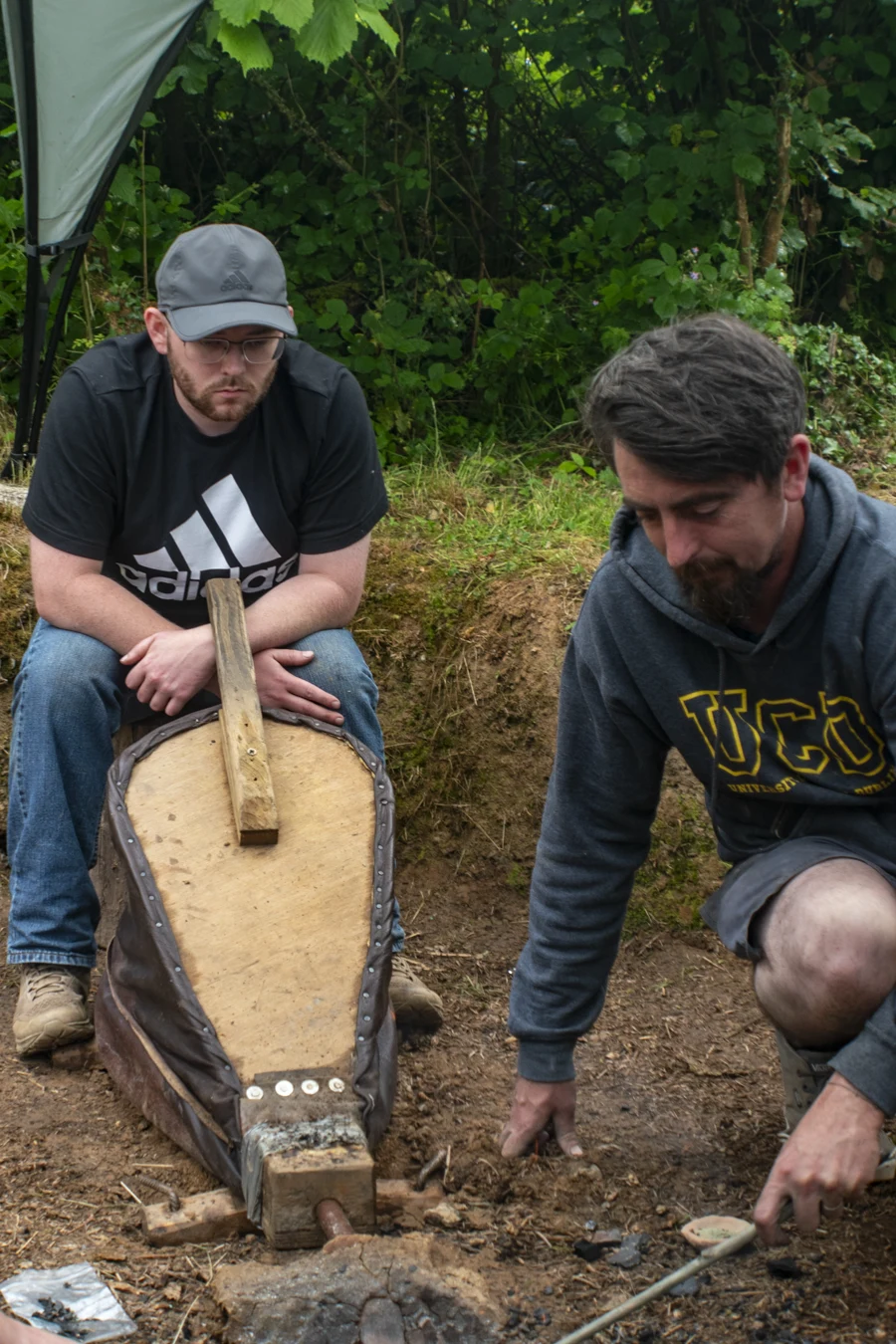
We worked with a clay furnace, charcoal, bellows, and crucibles to create the conditions needed to melt metal. Through the combined efforts of the team, we successfully produced copper and bronze in approximately six hours.
The result provided evidence that challenged the limitations proposed in the paper under the conditions we tested. It reinforced the importance of examining assumptions through experimentation: working with the materials can reveal possibilities that are difficult to assess through theory alone.
Constructing and Testing a Fulacht Fiadh
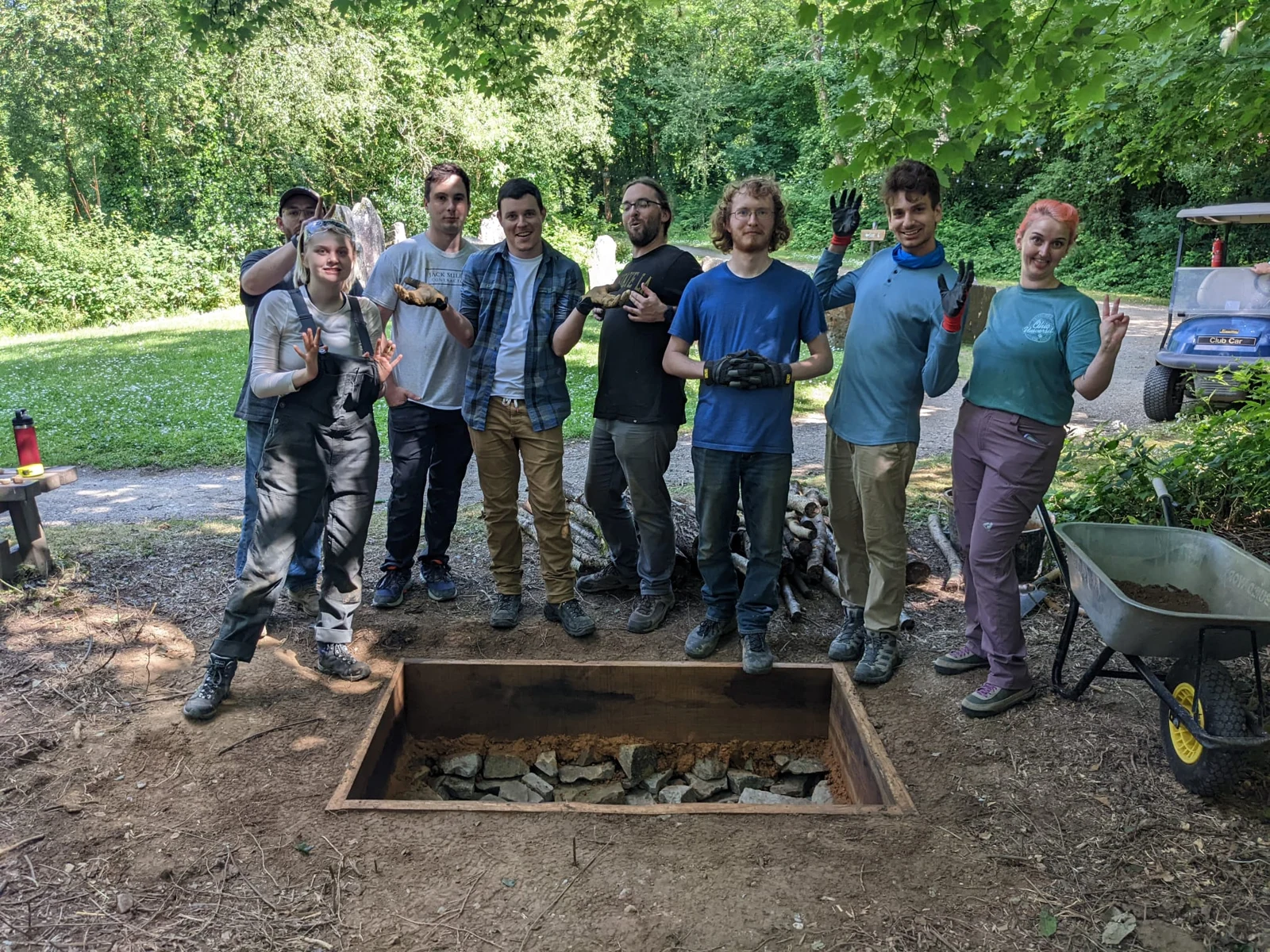
We spent two days constructing a fulacht fiadh, preparing the trough with a stone base, oak boards, and backfill to help retain water. Building it required us to consider how the different materials would function together and how the structure could withstand use.
Once it was completed, we tested its ability to cook food. We heated stones in a large fire beside the trough, then transferred them into the water. We wrapped meat in straw and cooked it alongside vegetables, exploring a possible method of preparing food with heated stones.
In a little over three hours, we successfully cooked pork loin, chicken, potatoes, broccoli, and other vegetables, providing lunch for the entire crew. Although the ingredients were not all prehistoric, the experiment demonstrated that the structure and heating method could successfully prepare a substantial meal.
This did not establish that every fulacht fiadh served the same purpose. It demonstrated the feasibility of cooking in the structure we had built and gave us practical experience of the work involved in managing the fire, moving heated stones, and maintaining the cooking process.
Building a Bee Bole Wall
The property already had beehives resting on a flat stone surface. Our task was to construct a bee bole wall that would elevate the hives above the ground, helping protect them from mice, rats, and other animals that could damage them.
We spent a week learning to prepare hot ash mortar with lime and using it to build the wall. The project introduced us to a traditional building method and required careful attention to the preparation of the mortar, the placement of stones, and the stability of the structure.
We also placed a time capsule within the base of the wall. I recorded this moment and shared the video on my TikTok and Instagram accounts. It added a personal connection to a project that would remain at the park beyond our time there—a small record of the people who helped build it.
Preparing a Medieval Feast
Our field school concluded with a Medieval Feast that we planned, prepared, and shared together. We roasted lamb over an open fire after marinating it in berries, mint, garlic, thyme, rosemary, salt, pepper, and cayenne pepper. Alongside the lamb, we prepared a salad, roasted potatoes, and made bread from scratch.
We cooked largely using medieval methods, while drawing on ingredients found in Ireland at different points throughout its history. The meal included later additions, such as potatoes, and was an exploration of historical cooking techniques rather than a strictly period-authentic menu.
The feast brought together the practical skills and cooperation we had developed throughout the programme. Following our earlier success cooking in the fulacht fiadh, it offered another opportunity to explore the relationship between food, technology, and communal work. Sharing a meal we had prepared together was a fitting conclusion to the month.
Exploring Ireland’s Archaeological and Historical Landscapes
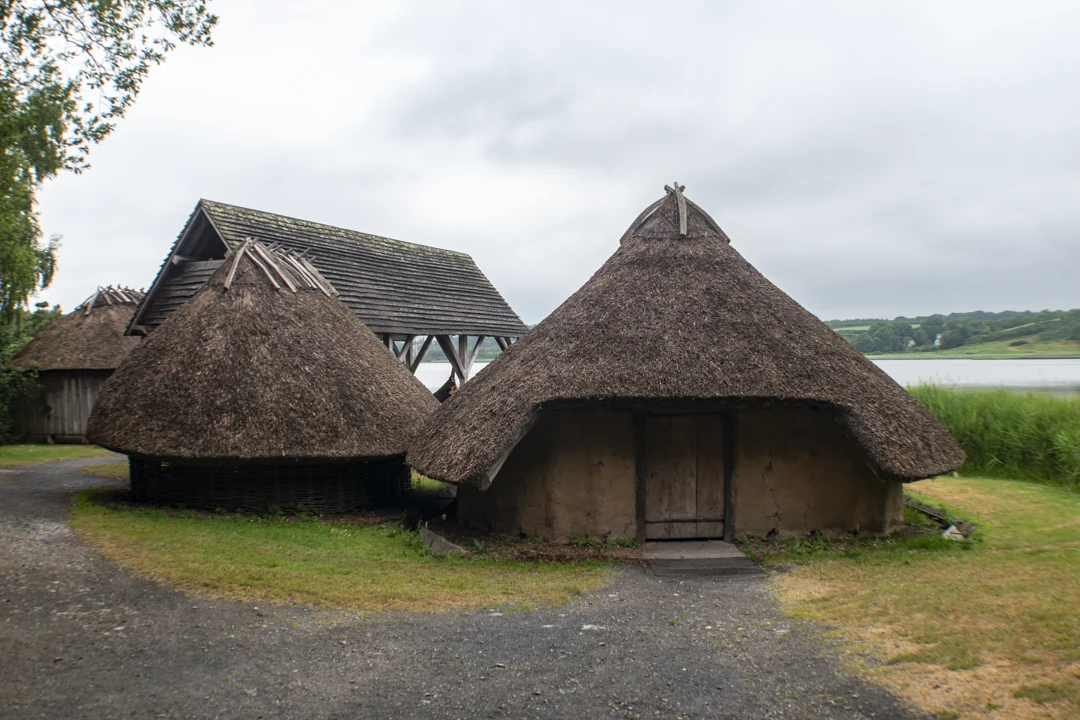
Alongside our practical projects, weekly field trips introduced us to archaeological and historical sites across Ireland. We explored the Irish National Heritage Park and the archaeological site of Carrick, connecting our experimental work with the material evidence and historical setting that helped inspire the programme.
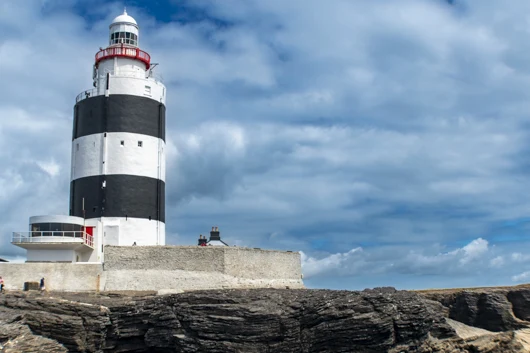
Our visits included Knockroe passage tomb, St Mullins, Glendalough’s early medieval monastery, and Ferns. We also visited University College Dublin and the National Museum of Ireland, bringing the places we explored into conversation with archaeological research and museum collections. Later excursions took us to Hook Lighthouse and Tintern Abbey, extending our exploration of Wexford’s medieval heritage.
Moving between practical experiments, archaeological sites, and museum collections helped connect the techniques we were learning with the surviving archaeological record. These trips broadened the context of our projects, encouraging us to consider how objects, buildings, and landscapes together inform our understanding of people’s lives.
The excursions were an integral part of the field school—another opportunity to learn through observation, ask questions, and explore how Ireland’s heritage is studied, preserved, and shared.
Sharing Research with the Public
Because we worked within a public heritage park, visitors could observe our projects and ask questions as they developed. Explaining what we were doing required us to make the methods and research questions accessible, including why we had selected particular materials and what we hoped to learn.
This was an important part of the experience for me. It connected my interests in archaeology and teaching, while reminding me that research gains value when people have opportunities to engage with it. Questions from visitors also encouraged us to reconsider how clearly we understood and communicated our own work.
What I Took from the Experience
My time in Wexford deepened my appreciation for the relationship between archaeological evidence, practical knowledge, and interpretation. Each project presented different challenges, yet all required observation, cooperation, and a willingness to revise an approach when the materials responded differently from what we expected.
The experience continues to inform how I approach research and education. It reinforced the value of testing assumptions, documenting the process, and communicating both the results and their limits. Above all, it showed me how much we can learn by working directly with materials—and by making space for others to participate in that learning.